Advertisement
Meeting Families Where They Are
Meeting Families Where They Are
Acclaim Award Recipient Carle Health Medical Group's Nurse Home Visiting Program
At AMGA's 2026 Annual Conference, Urbana, IL-based Carle Health Medical Group was named AMGA's 2026 Acclaim Award recipient. The organization was recognized for the following initiatives:
- Designing maternal/child nurse home visiting (NHV) services to integrate with the health system and building trust enough an enhanced patient experience by meeting families where they are, in their homes, with culturally responsive, relationship-based care
- Identifying and assessing populations disproportionately affected by inequities and providing culturally responsive care via routine NHV screening at different developmental stages
- Demonstrating timely and comprehensive prenatal and postpartum care, higher engagement in health and wellness activities, decreases in neonatal intensive care unit utilization, and meaningful reductions in emergency department (ED) utilization through NHV services, evidenced by an extensive five-year review of its impact: an overall 57.3% reduction in ED utilization, comparing system ED usage two years prior to enrollment vs. two years after enrollment
- Focusing on team stability, improving retention rates, creating continuity, and reducing disruption, leading to the well-being of the staff delivering services
"Receiving the Acclaim Award is an honor we hold in the highest regard and speaks to Carle Health's unwavering commitment to provide highly accessible, world-class care and service to our community," said Julianna S. Sellett, DNP, RN, vice president, Carle Community Health. "Our teams work tirelessly, collaborating with a diverse range of cross-sector partners and community members to build an innovative infrastructure and culture of community health. Our overarching goal is to ensure that everyone, regardless of life circumstances, has the opportunity to lead a prosperous and healthy life."
Below is an excerpt from Carle Health's Acclaim Award application.
AMGA Acclaim Award
The AMGA Acclaim Award honors healthcare delivery organizations that are bringing the American healthcare system closer to the ideal delivery model—one that is safe, effective, patient-centered, timely, efficient, and equitable. For their accomplishments, Scripps Coastal Medical and WellSpan Health were named Acclaim Award honorees.
Structured around the Quadruple Aim, the Acclaim Award criteria include improving the patient experience of care, improving the health of populations with a focus on quality outcomes, reducing the per capita cost of healthcare, and emphasizing workplace wellness.
For more details and to apply for the Acclaim Award, visit amga.org/acclaim.
Below is an excerpt from Carle Health’s Acclaim Award application.Nurse Home Visiting Program
Our organization designed the Nurse Home Visiting (NHV) program to transform the experience of care for expectant families by bringing trusted, evidence-based services directly into the home. Families receive personalized support from specially trained nurses, social workers, community health workers, and early childhood educators starting in early pregnancy through the child's second birthday. The NHV program enhances patient experience by meeting families where they are—in their homes—with culturally responsive, relationship-based care. Families benefit not only from evidence-based education and assessments but also from the confidence of knowing that their care team is connected.
A key strength of NHV is the closed-loop communication established between nurse home visitors and clinical providers. Structured pathways such as shared documentation, real-time updates, and case conferencing ensure that information gathered during home visits directly informs care plans. For families, this eliminates the burden of navigating complex systems and creates confidence that their providers are working as a team. For clinicians, it provides real-world context about home conditions and patient needs, allowing for more responsive and personalized interventions.
This connectivity between home-based care and clinical teams is not just theoretical, it has saved lives. One such example is a client who enrolled in home visiting services during the second trimester after experiencing complications from severe hyperemesis gravidarum. At 31 weeks, she began showing symptoms of preeclampsia. Through comprehensive assessments and frequent visits, her nurse home visitor identified concerning changes and, using established communication channels, promptly relayed findings to the obstetric team. The care coordination resulted in the client being admitted to labor and delivery, where she was diagnosed with severe pre-eclampsia and HELLP (hemolysis, elevated liver enzymes and low platelets) syndrome. Because of this timely escalation, she delivered safely and urgently, avoiding potentially life-threatening consequences. Postpartum care was similarly strengthened through ongoing home visits and continuous feedback to her clinical team, ensuring that follow-up needs were met and complications were prevented. The client later reflected, "My nurse home visitor saved my life and my baby's life." This story represents the lived experience of many families in the NHV program: care that feels personal, trusted, and connected, with safety nets that prevent crises and save lives.
Goals, Measures, and Data
The NHV initiative was launched with the clear goal of advancing maternal and child health equity through delivery of client-centered, high-quality, holistic care directly in the home to address medical and social drivers of health. While this team tracks countless operational and other types of outcome measures, the key objectives of this initiative are to:
- Provide timely access to prenatal and postpartum care
- Reduce neonatal intensive care unit (NICU) utilization and length of stay
- Improve chronic condition management and reduce emergency department (ED) utilization
- Prevent maternal mortality
- Reduce anxiety and depression and improve maternal mental health screening and referrals
- Expand developmental screening and early childhood visits
- Strengthen the workforce
- Optimize wellness and retention of our team
Each of these objectives are paired with measurable outcomes that are tracked and used to guide continuous improvement. Outcomes to date include:
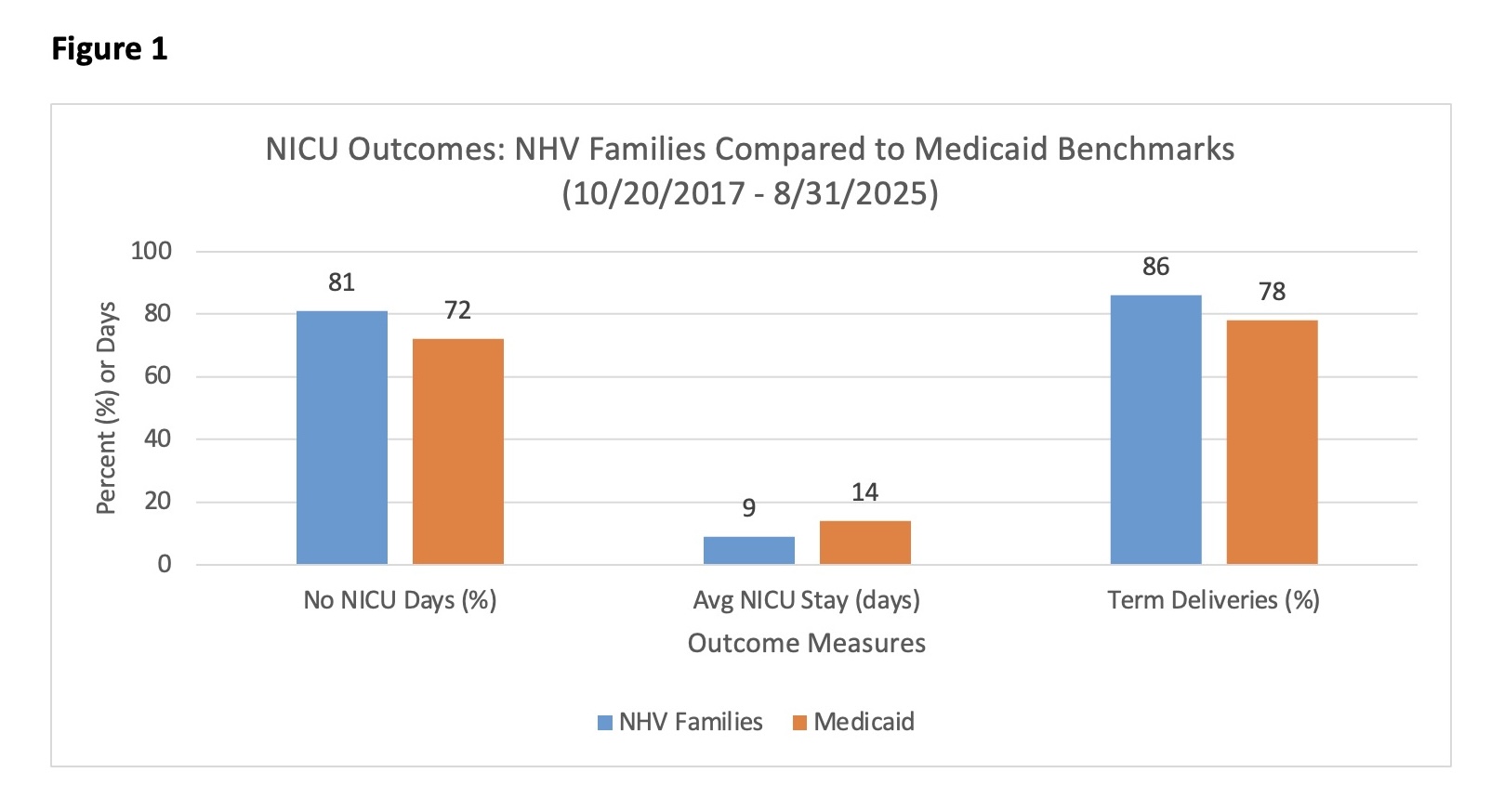
- 81% of infants born into NHV services avoid NICU admission altogether, compared to 72% of other Medicaid births (Figure 1)
- 86% of births are term deliveries compared with roughly 78% for the broader Medicaid population (Figure 1).
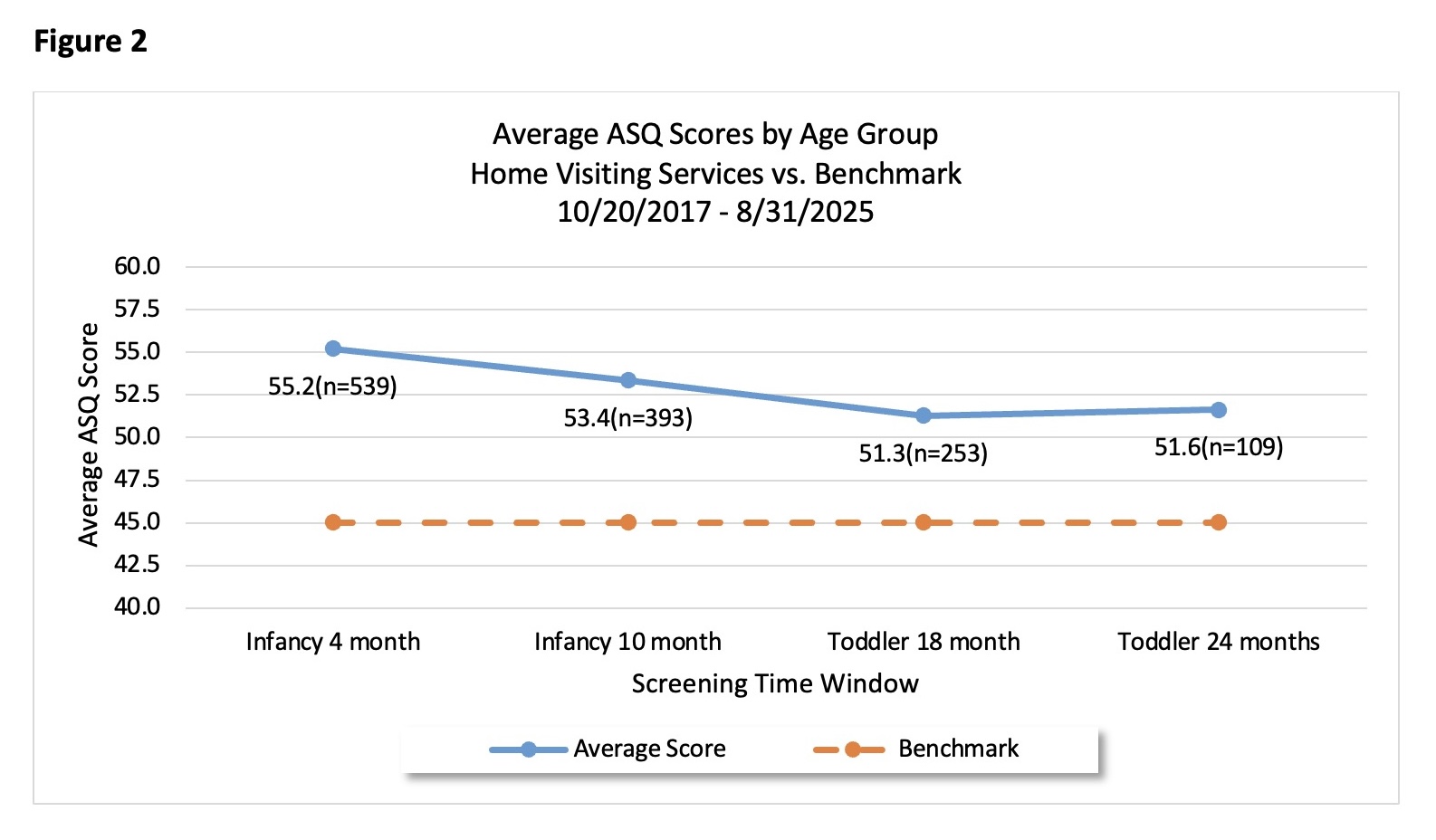
- These outcomes also directly impact early childhood development which score well above the benchmark and levels for intervention (Figure 2).
- Condition management, coupled with additional health system navigation demonstrated a 57.3% reduction in emergency department utilization during the first two years following enrollment.
- This team has experienced no maternal mortality, with more than 66% of enrollees having moderately high to high-risk pregnancies.
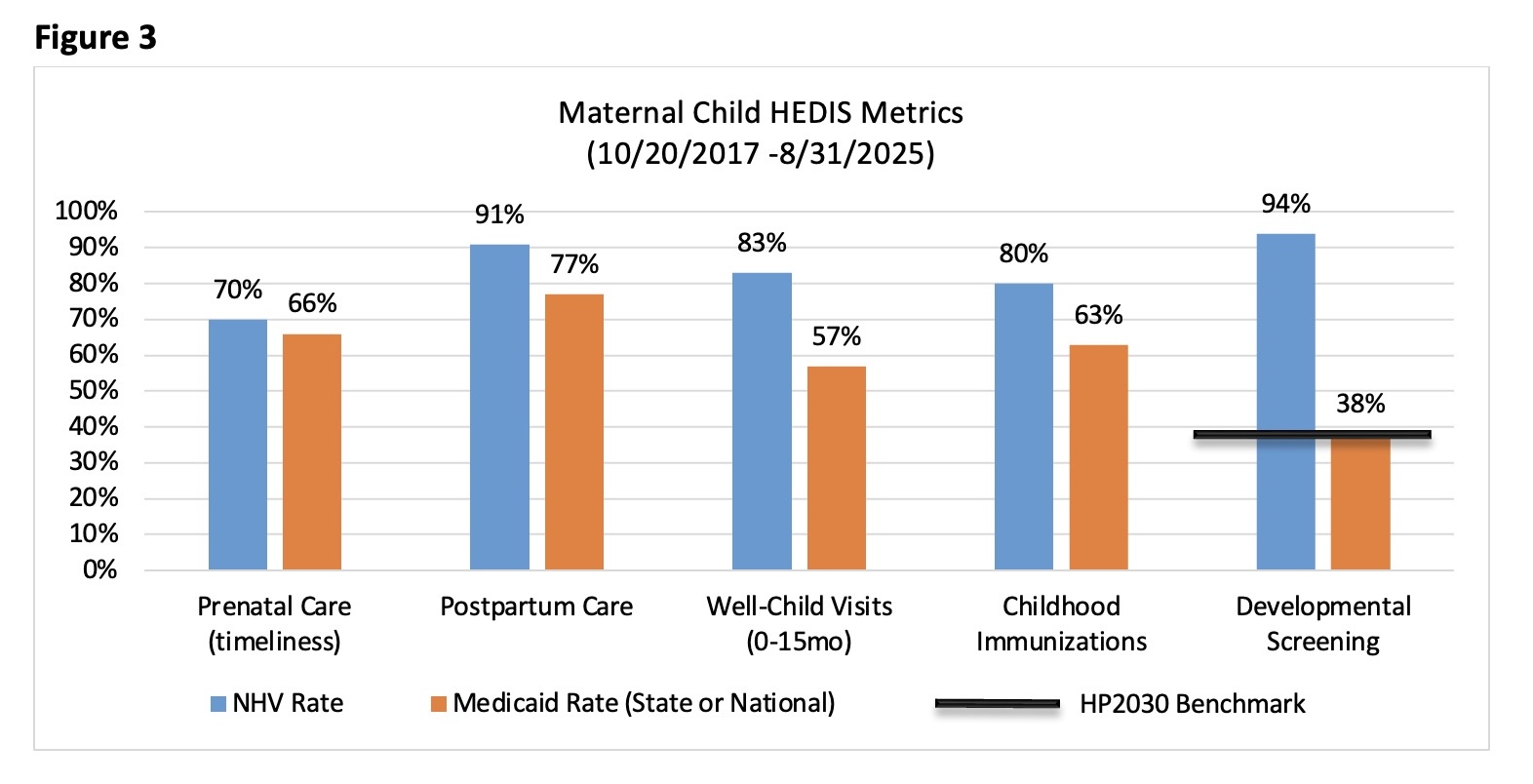
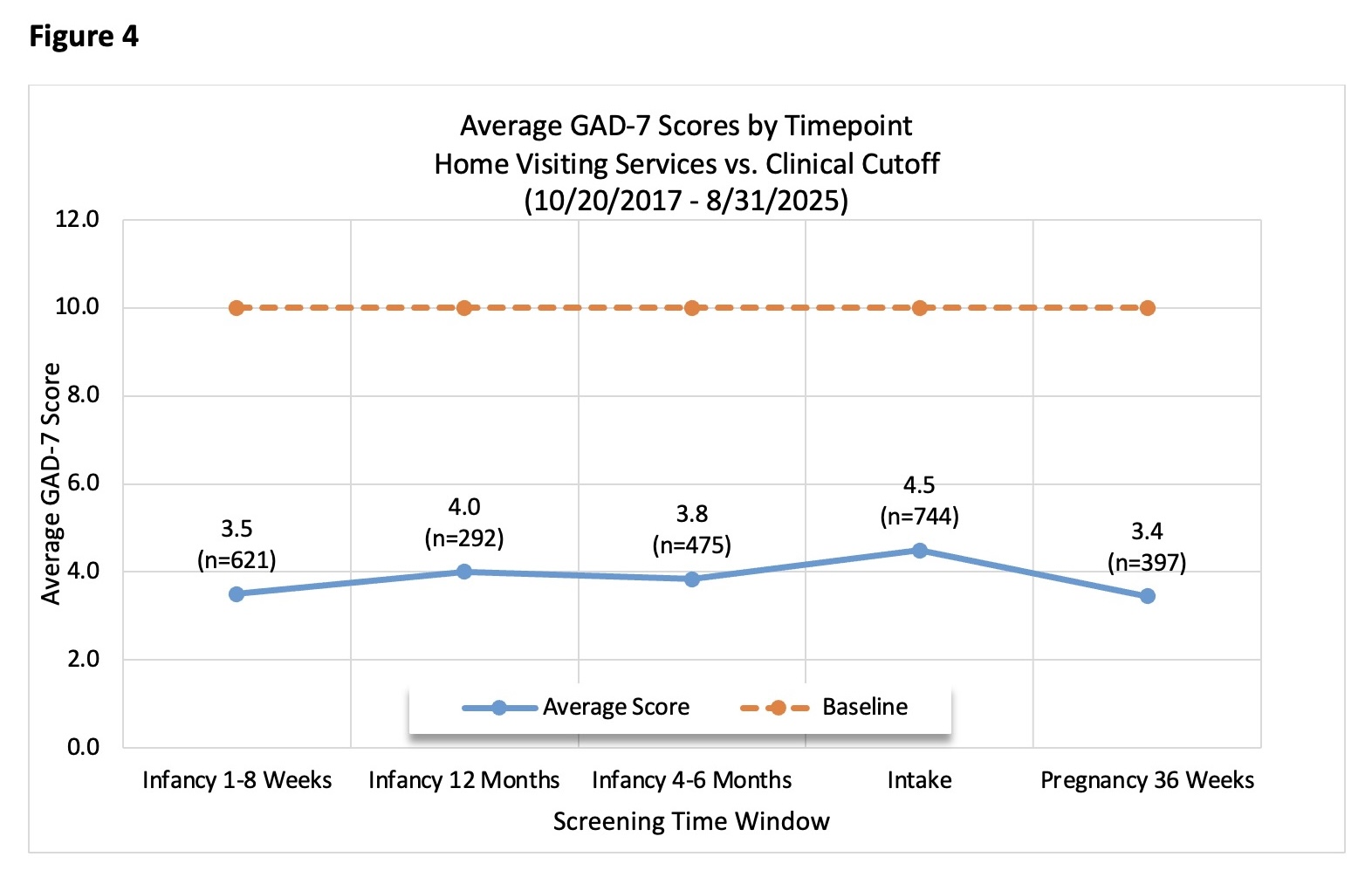
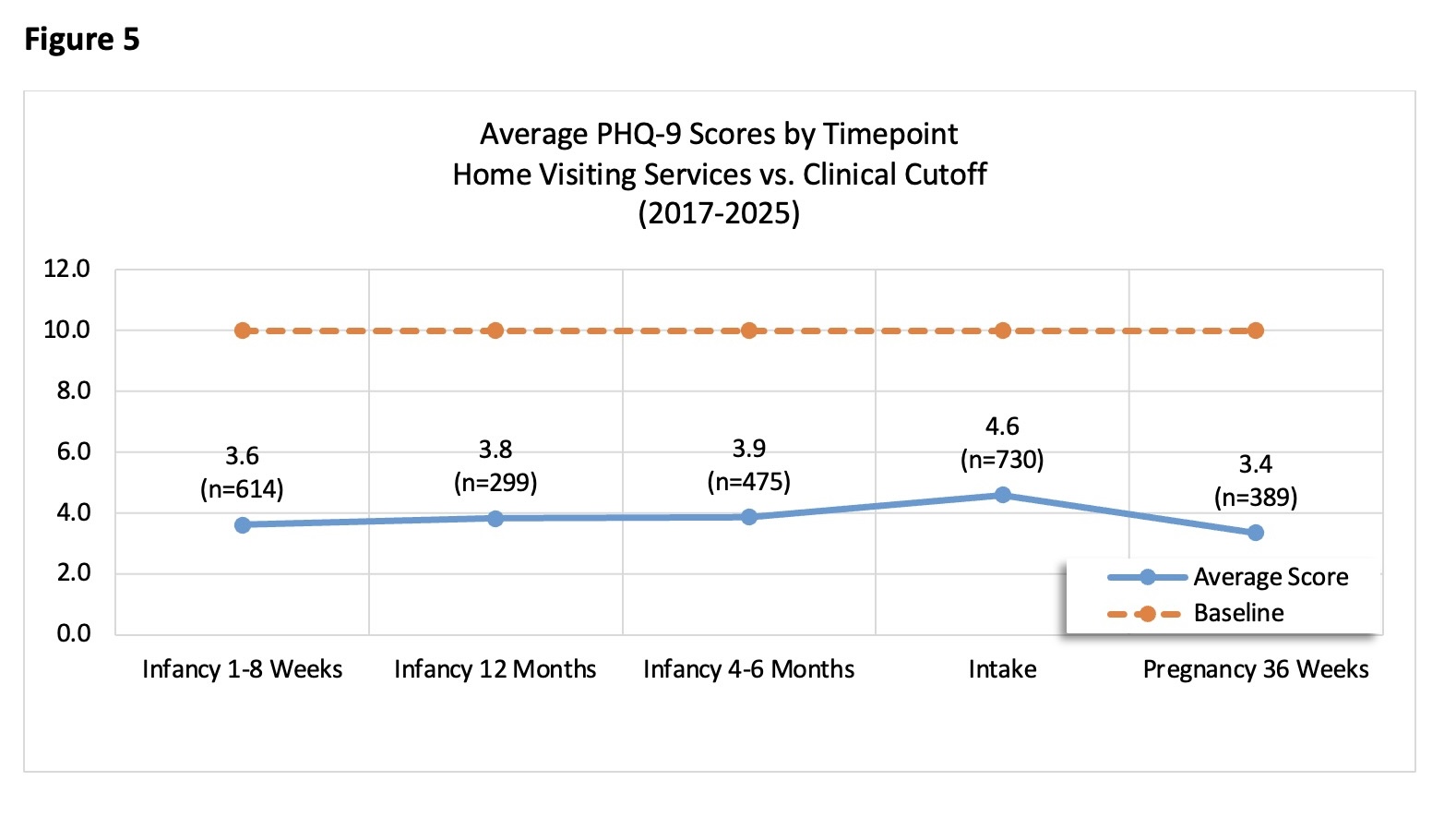
It should be noted that our enrolled families also exceed Medicaid benchmarks on prenatal, postpartum, and well-child Healthcare Effectiveness Data and Information Set (HEDIS) measures (Figure 3), and have lower levels of anxiety (Figure 4) and lower levels of depression (Figure 5).
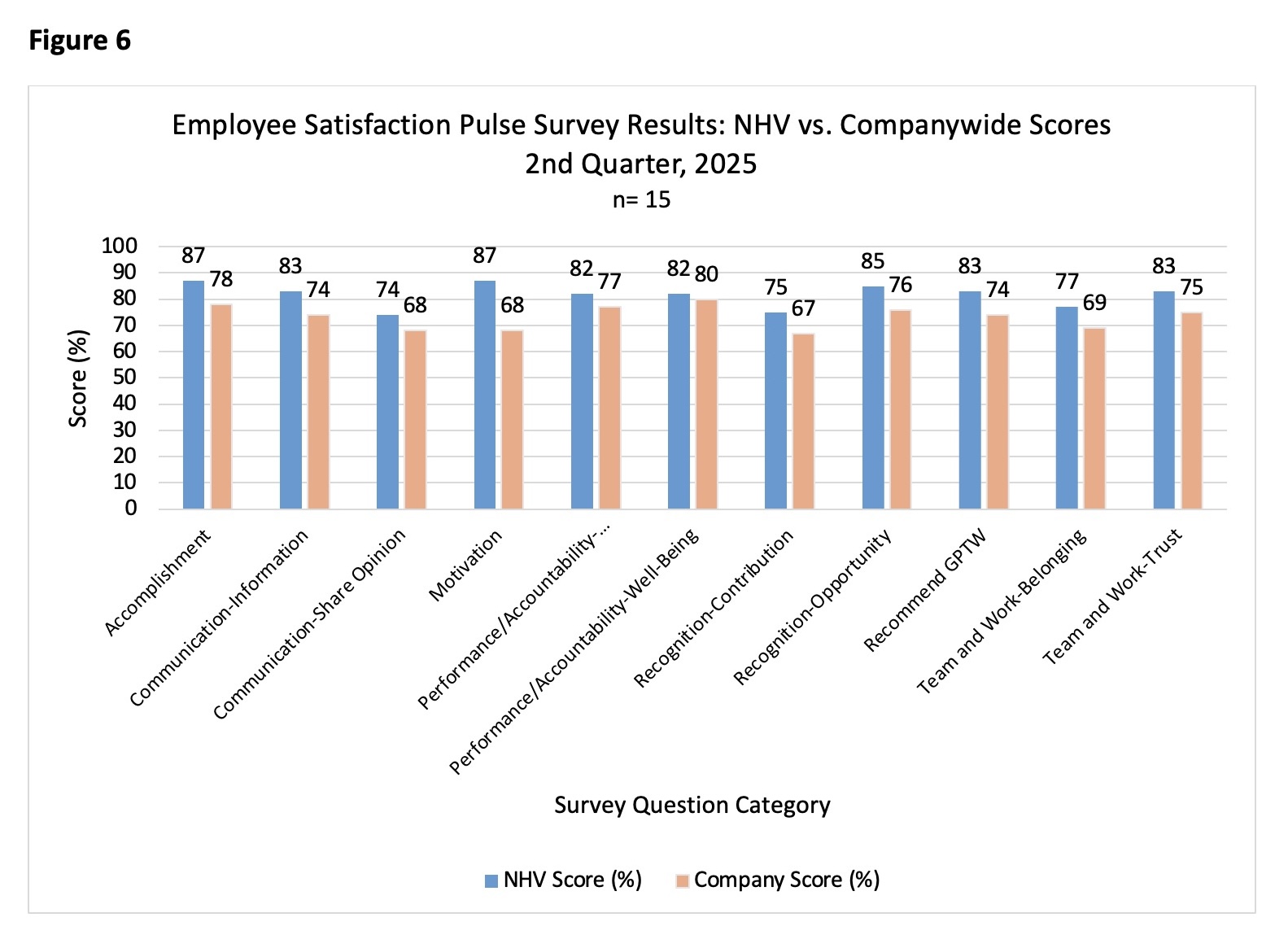
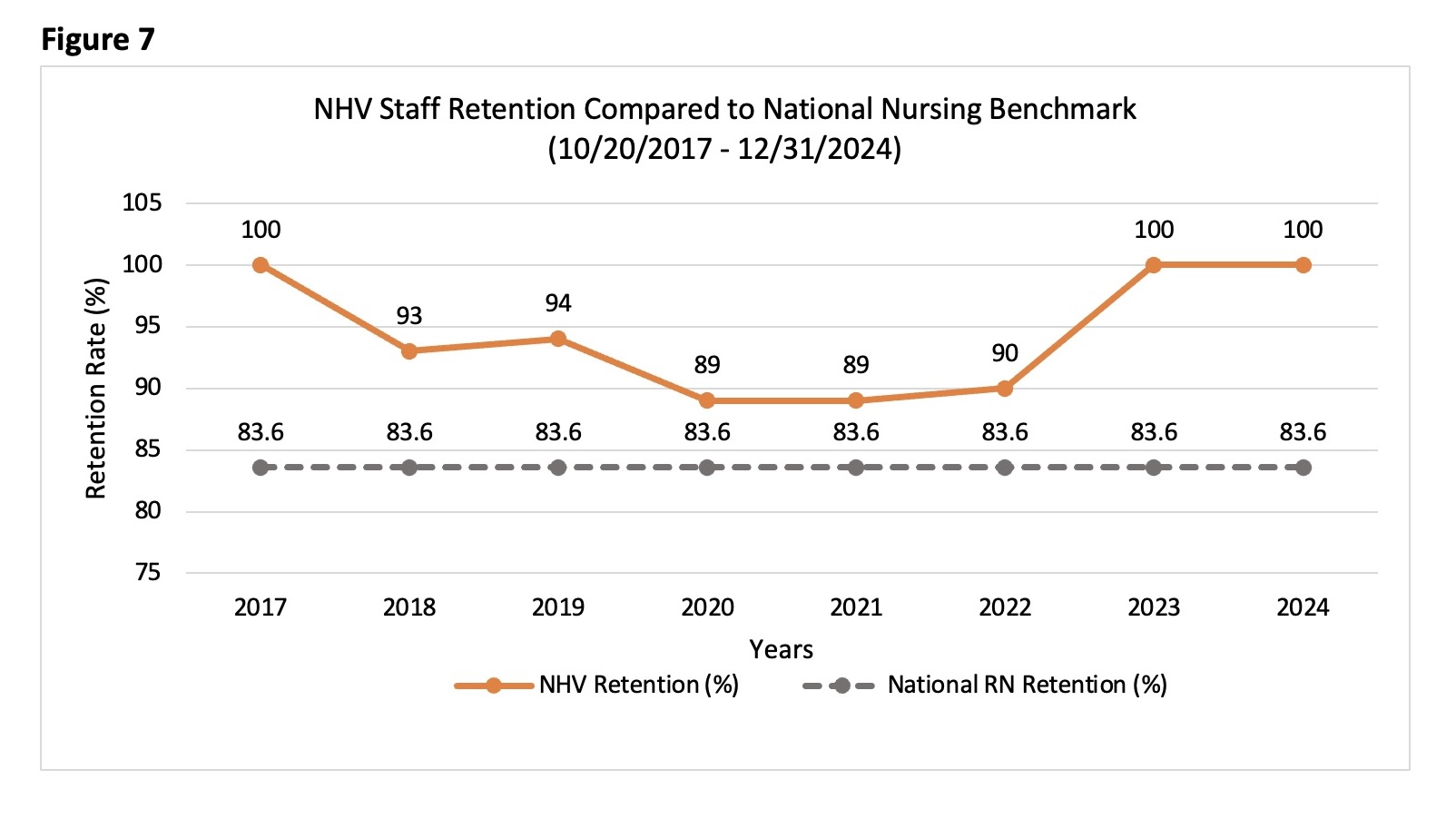
Our clinical outcomes, coupled with high client satisfaction (96.47% Promoter score) and high employee engagement (Figure 6) and retention (Figure 7) further demonstrate the NHV team's ability to achieve the Quadruple (Quintuple) Aim.
Implementation Process, Staff Roles, Training, Process Improvement Methods, and Engagement
As we launched our services, the continued listening and learning continued to be key and enabled us to quickly shift and improve our processes. Families described the challenges they faced in accessing consistent care, and clinicians identified the ways in which gaps between clinic and home undermined continuity. These insights also enabled us to make broader system improvements to mitigate gaps and enhance the client/patient experience all linked through closed-loop communication with clinical teams. This design broke down silos and created a continuum of care that was proactive, relational, and equity focused.
Implementation unfolded in phases. Nurses completed training in maternal-child health, reflective supervision, and trauma-informed care, while early childhood educators and social workers were integrated to address literacy, child development, and social needs. The team used Plan-Do-Study-Act (PDSA) cycles to refine referral pathways, documentation processes, and care coordination with obstetric and pediatric practices. Regular interdisciplinary team meetings created a feedback loop that allowed challenges to be identified quickly and solutions to be tested in real time. Engagement at every level was critical, ensuring that frontline staff were not just participants but co-designers of the evolving model.
The journey was not without obstacles. Recruiting and retaining staff for home-based care proved difficult, as the role demands resilience and flexibility. Families themselves often faced barriers such as housing instability, transportation challenges, and language differences, requiring new supports like expanded interpreter services and flexible scheduling. The COVID-19 pandemic created another layer of disruption, forcing the team to quickly adopt virtual visits while preserving trust and continuity. Each challenge became a catalyst for adaptation and innovation, reinforcing our resilience.
Important Learnings During This Aspect of Our Larger Plan
Several important lessons emerged through this initiative. Data-driven decision-making proved essential, as metrics such as NICU utilization, ED trends, and HEDIS performance informed adjustments in real time. Reflective supervision, while initially designed as a staff support, also enhanced patient care by helping providers process difficult cases and maintain effectiveness. Closed-loop communication between home-based staff and clinical teams emerged as a powerful driver of better outcomes, preventing delays in escalation of care. Above all, the experience reinforced that equity-focused care requires humility, flexibility, and strong partnership with families.
Sustainability and Spread Within Our Organization and/or Community
Sustainability has been demonstrated through both scale and endurance. Over eight years, more than 1,000 families have been engaged, with strong retention among both families and staff. The model is now a core component of the organization's community health strategy, with lessons learned informing expansion into early childhood partnerships, family engagement programming, and deeper integration with primary care clinics. By embedding this approach into the broader system, the initiative has ensured that its gains are not temporary but durable, capable of spreading across settings and influencing future care models. From a financial perspective, although some funding continues to be provided by our health system, the team has additional revenue from grants, philanthropy, and some limited reimbursement from payers. The cost avoidance remains strong associated with reduced NICU utilization, reduced ED utilization, and early childhood development impact on long-term population health.
Paying It Forward
This story demonstrates how intentional design, adaptive implementation, and commitment to equity can transform maternal and child health outcomes while advancing the Quadruple Aim. It is a story of listening, learning, and building a sustainable model that connects clinical excellence with community trust, resulting in healthier families and stronger systems of care.
"Receiving this award is not only a moment of pride, but also a reflection of our collective efforts and dedication," said Sellett. "We are beyond grateful for the chance to share this pivotal initiative with others. Throughout our journey, we have learned so much from many sources, and we remain committed to paying forward our knowledge and experiences to help others in their own pursuits."
The full study, published as open access in Academic Pediatrics, is available here.
References
- National Cancer Institute. 2025 HPV and cancer. National Institutes of Health. Available at cancer.gov/about-cancer/causes-prevention/risk/infectious-agents/hpv-and-cancer. Accessed March 23, 2026.
- Centers for Disease Control and Prevention. 2021. Human papillomavirus (HPV) vaccination recommendations. Available at cdc.gov/vaccines/vpd/hpv/hcp/recommendations.html. Accessed March 23, 2026.
- S.C. O'Leary and H.M. Frost. 2023. Does HPV vaccination initiation at age 9 improve HPV initiation and vaccine series completion rates by age 13? Hum Vaccin Immunother 2023; 19: 2180971.
- K. Saxena, N. Kathe, P. Sardana, et al. 2023. HPV vaccine initiation at 9 or 10 years of age and better series completion by age 13 among privately and publicly insured children in the US. Hum Vaccin Immunother 2023; 19: 2161253.
- O.E. Iversen, M.J. Miranda, A. Ulied, et al. 2016. Immunogenicity of the 9-valent HPV vaccine using 2-dose regimens in girls and boys vs a 3-dose regimen in women. JAMA 2016; 316: 2411.
- H.G. Rosenblum, R.M. Lewis, J.W. Gargano, et al. 2021. Declines in prevalence of human papillomavirus vaccine-type infection among females after introduction of vaccine — United States, 2003–2018. MMWR Morb Mortal Wkly Rep 2021; 70: 415.
- M. Drolet, E. Benard, N. Perez, et al. 2019. Population-level impact and herd effects following the introduction of human papillomavirus vaccination programmes: updated systematic review and meta-analysis. Lancet 2019; 394: 497.
- A.K. Minihan, P. Bandi, J. Star, et al. 2023. The association of initiating HPV vaccination at ages 9–10 years and up-to-date status among adolescents ages 13–17 years, 2016–2020. Hum Vaccin Immunother 2023; 19: 2175555.
- D.M. Holman, V. Benard, K.B. Roland, et al. 2014. Barriers to human papillomavirus vaccination among US adolescents: a systematic review of the literature. JAMA Pediatr 2014; 168: 76.
- M.B. Gilkey, W.A. Calo, M.W. Marciniak, et al. 2017. Parents who refuse or delay HPV vaccine: differences in vaccination behavior, beliefs, and clinical communication preferences. Hum Vaccin Immunother 2017; 13: 680.
- E.L. Ciemins, A. Rooney, J.A. Yaun, et al. 2025. Initiating Human Papillomavirus Vaccination at Age 9: Strategies for Success From 5 US Health Systems. Acad Pediatr 2025; 25: 102869.