Making Care Better for the Patients and Care Teams We Know—and for the Ones We Don't Know
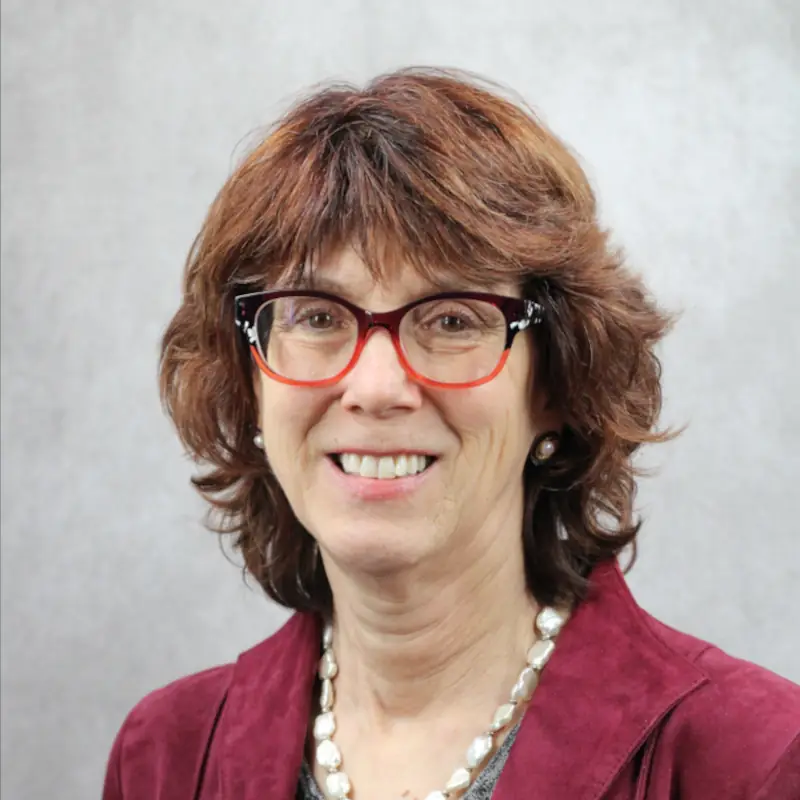
By Beth Averbeck, MD, FACP
Following is an excerpt from Dr. Beth Averbeck's remarks at AMGA’s 2026 Annual Conference in Las Vegas. Dr. Averbeck is senior medical director for primary care at HealthPartners and Chair of AMGA's 2026 Board of Directors.
Good morning. It's great to see so many friends and colleagues here in Las Vegas. The energy and camaraderie here at the conference are palpable, and you can anticipate a day that will leave you energized.
Take a moment now to think. What made you decide to go into healthcare? When I ask that question to clinicians and care teams, these are the themes I hear: wanting to help people; build relationships; continued learning.
For me, it was Ethel. When I was in college, I worked as a nursing assistant at a nursing home in New Ulm, MN. New Ulm is a small, very German town of about 13,000 in the southern part of the state. Many of the residents at the facility emigrated from Germany, so English was their second language.
Ethel was one of them.
She was in her 90s, had dementia and severe arthritis, and could no longer walk. There was something mysterious about her that I couldn't quite figure out. She was smart, had a great distant memory, and made unique observations that complemented her quick wit. There have been only two other people in my life that think so creatively: a band director of mine and my daughter. She was also a bit mischievous, managing to score an occasional extra dessert off someone else's tray.
When Ethel first moved into the nursing home, she had just a bit of apprehension about someone helping her with things she used to do on her own, like walking, bathing, and dressing. Over time working with her, I went from being a stranger to being a trusted aide. I remember sitting outside on a picnic bench one hot summer night after supper, mosquitoes buzzing nearby. Ethel was next to me in her chair and bright yellow gingham dress. I said to her, "There's something special about you. Tell me your story."
Ethel grew up in a small town on a farm, was married, had children, didn't work outside her home, and couldn't understand why she wasn't allowed to vote. She was a suffragist—an activist in her small community who not only helped shape the movement, but also helped communicate the news when the 19th Amendment was passed. She said that was a lot of work, because there was no TV then and men controlled the newspapers.
In that moment, I no longer saw Ethel as the woman with fingers twisted by arthritis and a mind failing with time. She was the activist I was privileged to care for—someone who helped pave an easier path for me.
That was her story. And I decided that night that I wanted to care for more people, all of whom had their own rich stories. To this day, after I meet a patient and go through their medical needs, I ask, "What's your story?"
Here's mine.
I grew up outside of Milwaukee and honestly think my mom decided when I was in utero that I'd be a doctor. She won't admit it, but I remain suspicious. My parents were teachers, and my dad was the church organist and choir director. I inherited his love and aptitude for music and became a musician. I play oboe and English horn in three wind ensembles and a trio, and I do solo performances. I also make and occasionally sell oboe reeds. If I decide to start my own business, it will be called the Reluctant Reed Maker.
I'm a sister, a mom, a wife, and a daughter caring for my 89-year-old mom. I'm not a great cook, but I bake awesome cheesecakes. I like to travel and hike, although my days of sleeping in tents are long over. I'm a knitter. If I'm sitting, I'm knitting.
I was a bit conflicted in college about whether to be a doctor, teacher, or professional musician. Looking back, I believe I've found the best of all three. As a doctor and leader, I teach and coach. My music is part of my well-being outside of work.
We are in the best profession. We impact the lives of our patients and their caregivers and are privileged to be a small part of their stories.
I'll never forget how it was put to me by one longtime patient. I was in an exam room with Mary. She was about 85 and still managed to live independently despite some cognitive impairment. I stood in my white coat next to the exam table where she sat in her gown. When I was done listening to her heart and lungs, she asked me what I did when I wasn't in clinic.
By that time, I had taken on more leadership responsibilities, so I wasn't in clinic as often. I did my best to explain quality improvement, recruiting clinicians, working with teams, etc. As I continued to babble, she appropriately interrupted and said with a big smile, "I get it. When you see patients, you are making care better for people you know. When you aren't seeing patients, you are making care better for people you don't know."
That was my "aha" moment. Mary had just written my job description and, in a way, my purpose statement. Now I could tear up the four-pager that was in my files.
"I make care better for the patients and care teams I know, and for the patients and care teams I don't know."
What's your purpose statement? What brings you to work every day? What brought you to this conference?
In the spirit of making care better for patients, we may need to adjust our own beliefs. My clinical practice is geriatrics, which includes longitudinal care in nursing homes and transitional care where patients have shorter stays. It was inside the transitional care unit where I met George during the COVID-19 pandemic. Vaccines had just become available.
George had heart failure, diabetes, and hypertension, among other ailments, and he was partially paralyzed from a previous stroke. He was frail. And I knew going into his room for the first time that he had declined a vaccine. At the end of our visit, I said I was aware he refused the vaccine and asked if he had questions. He said no. And I left.
The next week when I saw him, I sat down in a chair next to his wheelchair, put away my stethoscope, closed my computer, looked up at him, and asked, "Would you be willing to share with me why you don't want the vaccine?"
He told me he was a retired police officer who experienced bias and prejudice in his personal and professional life. He watched as less-qualified colleagues received promotions. He saw his children get passed up for opportunities when they were more qualified.
He said he felt mistreated by people with authority, including the government. He lost trust in most institutions, so he didn't trust the vaccine was developed with his best interest in mind. He declined my offer to talk with one of our researchers about the vaccine.
I paused and took a slow breath to reflect and recalibrate.
George and I had different lived experiences, and yet we shared a common goal: to prevent him from getting COVID. I needed to shift my mindset to still support that goal.
I originally thought that maybe I could convince him to get the vaccine as we built our partnership. By truly listening to his story and allowing him to express his beliefs, I was able to meet George where he was. We discussed preventing exposure and how to keep him safe when he went home. At the end of the visit, he said, "I hope you still respect me." It never occurred to me that he would think that my respect for him was at risk.
In that moment, we established trust.
We are facing challenging and polarizing times, and—more than ever—it's important that we meet these challenges. Even when we don't agree, a good start is finding shared goals. We can lead with humility, curiosity, and respect to build trust. Trust leads to better understanding and a stronger community.
Let's build those bridges of trust with patients to help guide them through their health journeys. Let's work together on shared goals to improve our healthcare system. And let's never forget our purpose: to make care better for the patients and care teams we know—and for the ones we don't know.
Beth Averbeck, MD, FACP, is senior medical director for primary care at HealthPartners and Chair of AMGA’s 2026 Board of Directors.
Advertisement